New guidance from Court of Appeal following a reference by the Solicitor General
Examination of sentences given to 3 men who sexually attacked women during burglaries leads to sentencing guidance for future cases.
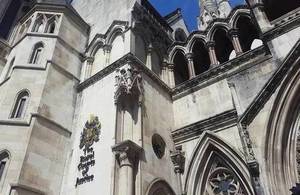
The Court of Appeal has increased the sentences of 3 offenders who sexually attacked women during burglaries in homes they were entitled to regard as ‘safe havens’.
The appeal court judges also issued guidance to sentencing judges that the use of photographs taken by mobile phones or digital cameras, increasing the hurt and humiliation of the victim, is to be treated as a seriously aggravating factor.
Their original sentences were referred to the court by the Solicitor General, Edward Garnier QC MP, to the court as possibly unduly lenient.
Lord Chief Justice Lord Judge, Mr Justice Henriques and Mr Justice Davis ruled that the sentences were unduly lenient. In 2 of the attacks the offenders took pictures of their victims.
Welcoming the judgment, the Solicitor General said:
The Court of Appeal has now made clear that sexual assaults and rapes committed during the course of domestic burglaries will attract a far higher sentencing starting points than previously.
These 3 cases were important on their own facts. Each of them was unduly lenient. But, more broadly the Court of Appeal said that the victims sexually assaulted or raped in their own homes suffered not only the attack but also the destruction of the sense of security and safety they were entitled to feel in their own homes.
Michael Chukudi Anigbugu had been sentenced to 8 years’ imprisonment at Wood Green Crown Court, London for 2 offences of rape and 4 years concurrent in respect of 2 offences of sexual assault by penetration. His sentence was raised to 15 years. Hyung-Woo Pyo had been sentenced to 8 years’ imprisonment at Leicester Crown Court for offences of rape, robbery and possession of a bladed article. His sentence was also raised to 15 years.
Mark McGee had been sentenced to 6 years’ imprisonment with an extended licence period of 6 years for an offence of sexual assault by penetration. He was also sentenced to 3 and a half years’ imprisonment concurrent for an offence of robbery at Truro Crown Court (therefore 6 years in total). His sentence was raised to 14 years, 6 months.
Lord Judge said the home should be ‘our safest refuge’ and that the taking of photos during sexual assaults for blackmail or humiliation was a ‘pernicious new habit’.